
INTERVIEWS
Lloyd Turner
An Interview by Michael Barrier
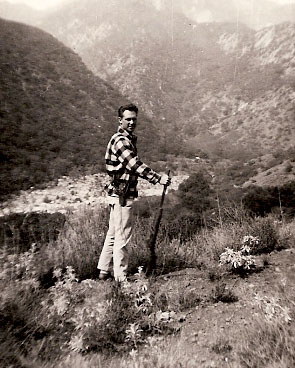 Lloyd Turner was living in southern Oregon when I visited him on
May 13, 1989. He had lived in California for many years before that,
as a comedy writer—first for Warner Bros. Cartoons, then for
Jay Ward on the original Crusader Rabbit TV cartoons, for
Bob Clampett on the Time for Beany puppet show, for Ward
again for almost ten years, and finally for Norman Lear on live-action
shows like All in the Family. He did a lot of free-lance
work, too, writing many of the Dell comic books of the fifties with
the Warner Bros. characters, as well as any number of television
sitcoms.
Lloyd Turner was living in southern Oregon when I visited him on
May 13, 1989. He had lived in California for many years before that,
as a comedy writer—first for Warner Bros. Cartoons, then for
Jay Ward on the original Crusader Rabbit TV cartoons, for
Bob Clampett on the Time for Beany puppet show, for Ward
again for almost ten years, and finally for Norman Lear on live-action
shows like All in the Family. He did a lot of free-lance
work, too, writing many of the Dell comic books of the fifties with
the Warner Bros. characters, as well as any number of television
sitcoms.
I'd been in Oregon in 1988, before I knew Turner was living there, and when I called him in the fall of that year and talked with him for a half hour or so, I was stung with regret that I'd not seen him when I'd been only a few miles from his home. I was living in Virginia and doing a lot of business travel then, and a few months later Northwest Airlines dropped in my lap a free ticket that I had to use quickly. So I flew to Oregon for the weekend, had dinner with Carl and Garé Barks, and spent the better part of the next day interviewing Lloyd Turner. That quick trip seemed a little nutty at the time, but after the interview I was very glad I'd made it.
Turner was a delightful man and a wonderful interview, I think in part because he viewed his career as a comedy writer with the detachment of someone who would rather have been doing something else. I remember the evidence in his home on the Rogue River of his strong interest in the navy. A military career was foreclosed to him by the loss of his left arm. Apparently, he lost his arm in an accident when he was a boy. Turner himself didn't tell me that—Lew Keller, his colleague at the Ward studio, did—and I had the strong feeling that the loss of his arm was a subject that Turner did not want raised.
I saw Lloyd Turner and his wife, Darlene, again in 1991, after he had survived a grueling bout with esophageal cancer. He suffered a recurrence of the disease in 1992 and died on November 30 of that year. He was 68 years old.
Out of considerations of length, I've limited the excerpts from my interview with Turner to his years at the Warner cartoon studio. I've not included an audio clip from the interview here, but you can hear an excerpt in my audio commentary for the Chuck Jones cartoon Hair-Raising Hare in the first Looney Tunes Golden Collection DVD set. In that excerpt, Turner speaks of the hairy monster that pursues Bugs Bunny as a Michael Maltese creation. Ted Pierce received screen credit for the story, though, and in his portion of the audio commentary Greg Ford talks about Pierce as the cartoon's writer. Such are the hazards attending the frequently misleading credits on the Warner cartoons. Maltese and Pierce often worked as a team at the time Hair-Raising Hare was made, and it's likely both of them worked on that cartoon. It was later that Maltese wrote exclusively for Chuck Jones and Pierce for Friz Freleng.
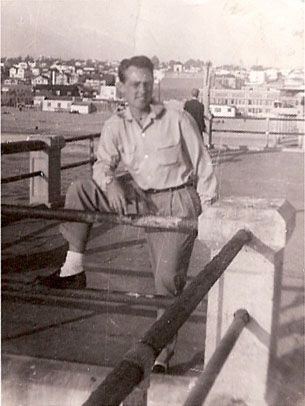
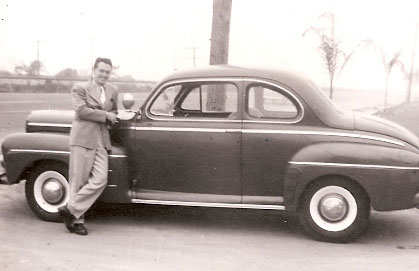
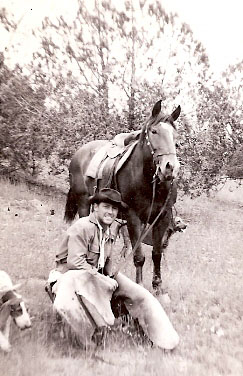
When I posted this interview in 2004, I had no photos of Turner from around the time he worked on the Warner cartoons. Happily, Janice Munn Johnson, who dated Turner when they were both living in Hollywood, has remedied that lack by giving me four wonderful photos from 1947 of the robust, outgoing young Lloyd Turner. Jan had moved from a small town in Ohio to Hollywood, where she found a job with Capitol Records. "I moved back to Ohio," she wrote to me in February 2008, "as I knew I was too young to get married (I was 19), and I also knew Hollywood was too wild for that small town girl. Anyway, I doubt that Lloyd was ready for a commitment." Turner sent her the photos of himself after she was back in Ohio. Ever the gag man, he called the car in one of the photos "Shasta," as in "she has to" have gas, water, oil, and so on.
Jan married someone else, a marriage that lasted until her husband's death fifty-two years later. But she always remembered Turner fondly. "He was a very special part of my life, albeit for a very short time," she says. "I know that is why I kept his pictures all these years!"
And now it's time for you, too, to get to know Lloyd Turner.
 Turner: I came to Hollywood from Oakland, California, in
1943, I think it was, and the motivation to get me down there was
Disney; all I could think about was working for Walt Disney. Boy,
he had me captured. I had many adventures before I even looked for
work. Met a girl first thing, you know. At a party, I mentioned
that I wanted to get into animation, and somebody said, "Have
you been over to Warner Bros.? They're always looking for somebody."
I said no, and they knew somebody; they said, "`Call so-and-so."
I don't even know who that was. But I went over there and applied
for work. I didn't know what [the] work was. It turned out it was
in-betweening; they needed in-betweeners. I certainly didn't go
there as a writer. I was pretty good at drawing—I'd majored
in art, and I had some art schooling, some college stuff, and scholarships
that I'd won. And so a man named Johnny Burton—he was kind
of like the manager. Johnny was a neat guy; he did a lot of the
running of the studio, but he was kept impotent by the powers that
be, starting with Leon, who was a funny little man. Have you been
told about Leon?
Turner: I came to Hollywood from Oakland, California, in
1943, I think it was, and the motivation to get me down there was
Disney; all I could think about was working for Walt Disney. Boy,
he had me captured. I had many adventures before I even looked for
work. Met a girl first thing, you know. At a party, I mentioned
that I wanted to get into animation, and somebody said, "Have
you been over to Warner Bros.? They're always looking for somebody."
I said no, and they knew somebody; they said, "`Call so-and-so."
I don't even know who that was. But I went over there and applied
for work. I didn't know what [the] work was. It turned out it was
in-betweening; they needed in-betweeners. I certainly didn't go
there as a writer. I was pretty good at drawing—I'd majored
in art, and I had some art schooling, some college stuff, and scholarships
that I'd won. And so a man named Johnny Burton—he was kind
of like the manager. Johnny was a neat guy; he did a lot of the
running of the studio, but he was kept impotent by the powers that
be, starting with Leon, who was a funny little man. Have you been
told about Leon?
Barrier: He's always described as a dapper little man, and there was some cologne that he wore that sticks in people's minds.
Turner: To shake hands with him, you took that scent to the grave. He was a little, rotund guy, almost completely bald, who combed his hair, as we all do, to cover it. A funny little guy; he looked like a caricature. He had a speech impediment, a lisp—it was "Sufferin' succotash," right down to his socks. Daffy got it, and then Sylvester got it. You'd see Leon, and he'd be standing there talking about the time clocks [lisping the "s"]. Everything was on time clocks there; if you were a minute late, they docked you ten; a minute after that, they docked you twenty. Ten minutes for every one minute over. It was a factory.
In '43, they put me on as in-betweener, and I was doing fine at that. It gets kind of boring after a while. What started me in the writing thing, I'd hear the writers, they were coming in late—we had to be there, like I say, if we were there one minute after eight we were docked ten minutes, and so on. I had to park on the street and run for it, but they got to drive on the lot. The writers and the directors got to drive on there, and they'd just walk in the back of the building. Neat. I kept listening to the writers, and they were always laughing; I think they had to hit the time clock, too, but it seemed like they were late a lot. Whether they just didn't care, or they didn't get docked, I don't know.
There was a bell that rang, kind of like at Alcatraz at dinner time; that meant it was eight o'clock, or it was time for lunch. You left on the bell and came back on the bell, and at five o'clock the bell went off again, and everybody was lined up in the halls waiting. It was like a stampede. That old building was like an old barn; I don't know what it had been originally. There was a checker there, an old man named Steve Milman; he was kind of palsied. He checked all the stuff, but he wanted to seem more important, because it was really mundane, what he was doing. I think this happened just before I got there, but I remember they talked about it until the day I left. He was sitting there at his desk, checking some scenes, and a giant old-fashioned light fixture over his head gave way—just through age, I think. It came down and lit right on his desk, missing him by the barest fraction, and really put him into shock. The building was literally falling apart; it was like a smelly old barn in there.
Did anybody ever tell you about Smokey [Garner]? He was a hillbilly—illiterate. He was paid in cash, because when he was back in the hills, the federal people got after him about taxes, or moonshining, or something. He somehow found his way out here, and he went to work for Schlesinger, and he insisted that he be paid in cash. He reasoned that if you paid in check, then you put out deductions, and the Social Security number, and then the federal people would find it. It became a pain in the ass to the bookkeeping department. They said, "Everybody here's on salary, we have contracts, we have bookkeeping, and this one guy we're [paying] out of the petty cash." So they finally called him in—Johnny got him in, and Leon, I guess, whoever was in charge at that time, and they said, "Look, Smokey, honest, honest, just because we pay you with a check, the federal people won't come and take you away. It doesn't mean anything. You're just one person in millions here in the United States, and if you sign a check and turn it in, they're not going to know." They talked him into it.
As luck would have it, about two weeks later the feds show up. They'd been looking for him for years. It had no connection, of course; and it was just a matter of a few questions. He wasn't ready for Sing Sing or anything. But as he left to go to the office, he was screaming, "I knew it!" It took months to calm him down. Such a character—a hopeless alcoholic. He'd go in that room, and when the red light was on, nobody could go in, and he'd get drunk in there. But everybody knew it, and everybody loved him. He had to fill out some form, and he could only barely write a little bit. Warren Foster was helping him, and Warren came in to me, and he said, "I've got to tell you the funniest thing. We just filled out this information that the studio needs—just your name, mother's maiden name, where you were born, Social Security number, address, how old you are. Basic information." I said, "How did he go?" He said, "He didn't know when he was born, but we had it down to where he was in a gas station, changing tires, at the age of three. So we did the best we could and turned it in."
Getting back to my thing—I heard all this laughing going along, nothing but fun city, jam sessions, and the writers seemed to be privileged characters. One day I walked in to Warren Foster and said, "What do you have to do to be a writer around here?" I was still across the hall, in-betweening in the [Robert] McKimson unit, [Foster's] unit. Warren worked on a little riser, at an old desk, in a Life magazine. He'd open the Life magazine, put his sketches in there and draw, and if you came in, he'd close the magazine. He wouldn't let you see what he was doing. You'd only see it when he pinned it up on the board.
Barrier: He was that afraid of being—?
Turner: I'll get to that in a minute. It was kind of an unsure feeling; I don't know what it was born of. Because everybody there certainly should have felt secure, with their talent.
Barrier: It was hard to get fired there, from all I've heard.
Turner: It was hard to get fired there. It was manageable, though. You know about George Hill?
Barrier: He was the story man for [Art] Davis just before you came along.
Turner: I replaced him; Bill [Scott] and I did. He had a little trouble with the booze; and was from New York. Mike [Maltese] and Warren knew him, from back in New York. They were all kind of like gutter kids—tough. Mike wasn't, but Warren was a tough monkey, he really was. A real city kid—a gutter kid.
 Warren looked up at me—you couldn't sit there eight hours
a day and just work; you couldn't. So he'd read the magazine, too.
If anybody came in, he used it as kind of a pad, a cushion, and
that became just a standard thing, that Warren worked in a Life
magazine. It had a double [purpose]. Warren was very crafty, very
street-wise, so he could close the book, and you couldn't see what
he was doing, or if Eddie Selzer came in, doing one of his surprise
patrols, you could start drawing—he was drawing inside the
Life magazine. When in fact, you were reading it until the guy came
through the door. Anyway, I said, "What do you have to do to
be a writer?" Warren looked up and said, "What have you
written?" I said, "Nothing." He said, "Go home
and write something." It hadn't occurred to me that I'd have
to do that. But I did. I went home, and I got a story; I knew enough
how to do most of it. I took it to Warren, and he said, "Okay;
not bad. I'm going to help you flesh it out a little bit, then you
go down, see Selzer, and see if you can do a jam session for everybody."
Warren looked up at me—you couldn't sit there eight hours
a day and just work; you couldn't. So he'd read the magazine, too.
If anybody came in, he used it as kind of a pad, a cushion, and
that became just a standard thing, that Warren worked in a Life
magazine. It had a double [purpose]. Warren was very crafty, very
street-wise, so he could close the book, and you couldn't see what
he was doing, or if Eddie Selzer came in, doing one of his surprise
patrols, you could start drawing—he was drawing inside the
Life magazine. When in fact, you were reading it until the guy came
through the door. Anyway, I said, "What do you have to do to
be a writer?" Warren looked up and said, "What have you
written?" I said, "Nothing." He said, "Go home
and write something." It hadn't occurred to me that I'd have
to do that. But I did. I went home, and I got a story; I knew enough
how to do most of it. I took it to Warren, and he said, "Okay;
not bad. I'm going to help you flesh it out a little bit, then you
go down, see Selzer, and see if you can do a jam session for everybody."
So I did; I wrote a story, and I went down, and they said, "Well, yeah, we'll listen to it." Terrifying experience, because they brought in all the directors, and all the writers, and Eddie Selzer [Schlesinger's successor as head of the cartoon studio] and his little secretary, who kept copious notes—on what, I don't know, but she was at his elbow all the time. Eddie was only about that big—a little Yosemite Sam. I never saw the man smile.
Barrier: Lloyd Vaughan [an animator for Chuck Jones] told me Selzer particularly disliked you, for some reason.
Turner: He was a little tyrant, and he was riddled through with insecurities. He never smiled, and he walked with his hands down in his pockets in a kind of a shuffling gate, and he looked up over his glasses, and he was so conscious of being little. It was hard to like him, and I'm sure I did things that agitated him, just unconsciously. So I'm not surprised. I'm not sure he liked anybody; he didn't seem like the kind of a guy that liked his mother.
Barrier: When you did a jam session, was this that first story you did with Bill Scott?
Turner: No, this was one I did all on my own.
Barrier: Was it made into a film?
Turner: I was just trying to think; I don't even remember the title. I think it was Doggone Cats.
Barrier: That's the very first one you have screen credit for, with Bill Scott.
Turner: I think it was pulled out of the bucket and we reworked it and used that—I think. I did the jam session, almost had a heart attack, nobody said anything, and I looked at Eddie, and he [looked sour]. And I looked at the rest of the guys, and they were all—it didn't kill anybody, but it was a story, and it worked. A couple of days later, [Selzer] called me down to his office—they had a P.A. system, and they'd boom your name up and down—and he said, "If there's an opening, we'll give you a chance." I was thrilled. George Hill was in there at that time, and he wasn't getting along with Artie. Artie was insecure in the story end of things. A neat guy—I thought he was one of the more creative guys there—good animator, and I was taken with his drawing; I thought his drawing ability was excellent. He had a style that I liked. Now, when I see some of that old Davis stuff, it doesn't strike me that way, but at the time, I was very impressed.
Chuck Jones was really the strength there; he was the force, I thought. I didn't have as much to do with Friz as I did with Chuck, and I guess that's because of Mike. I adored Mike, right from the beginning. He was less suspicious. [But] they were all suspicious. When Bill and I went in there—I thought that they threw me into the unit, I thought I was I was alone, and I wasn't ready for this; I thought, what have you done? You have really stepped into the deep water, and what are you going to do? Artie was a nervous wreck. Here's an unknown kid, going to come in and be his writer? He was spastic. Then, that Monday morning—nobody told me about it—this guy shows up at the door, and says, "Hi, my name is Bill Scott, we're going to work together." I went over and hugged him, and I said, "Thank God I'm not alone."
We spent the first week, I guess, getting acquainted. He was a neat guy, very intellectual, very bright guy, very good artist, much more literate than I, much more savvy, because he had been in the Army, and he'd gone through a lot of filmmaking stuff. He was many legs up on me in knowledge and experience, and he was very strong. I was very lucky to have Bill. He was less inhibited than I in the jam sessions; he was very outgoing, kind of a closet actor. I guess you've heard the famous story of when we did our first one for Artie.
Barrier: This was when you were doing the new version of Doggone Cats?
Turner: I guess it was. That isn't as clear as it should be, I guess. But we worked on it and we got it together, and all the time we were doing this, Ted Pierce would come up and he'd stand in front of our storyboard. He called us "juniors"—"Well, juniors, what are you guys up to?" He's looking for something funny, you know. "Um-hmm," and he'd walk out, wouldn't say anything. Mike came up a couple of times, and he's got little pieces of paper, and he's throwing them at us—"juniors" again. "Well, juniors, how you doing?" Warren came in, he looked at it. Warren was kind of helpful, though; Warren came in and gave us a couple of gags and laughed at a couple of things, and he said [in regard to some gag or piece of business], "This'll never work." Warren was good.
Barrier: That's funny, because Warren does come across as, as you say, suspicious—
Turner: Very. Paranoid. You've got to really protect yourself.
Barrier: How was that consistent with—were you guys just so young and so new—?
Turner: He liked me. He was my mentor. He saw something in me that was—I don't know, young brash kid, could have been his brother, could have been his kid. He was a lot older than I was. But he was helpful. Did not like Bill Scott at all. Bill was too outgoing, and was not intimidated by anybody, and very bright, very sure of himself, very cocky. I think Warren resented that. He was afraid of Bill. I said to Warren, "Why all this sneaking around looking at what's on our board with these guys downstairs?" He would laugh—he had a ready laugh—and he said, "Because new blood is dangerous around here. We don't take to new blood." Who knows, we might have become the hottest team since Hecht and MacArthur, and they were all suspicious of that.
Anyway, somehow we got our first story done, pinned up, and we prepared to jam it. The day came, everybody came in, including Eddie Selzer and his funny little lady with a pad and pencil. He sat in the front, and everybody surrounded him. Bill told the story, and there wasn't a laugh, there wasn't a reaction, there was nothing. The other guys, like Ted—he was a real bastard. He'd sit there looking out the window, anything to show disinterest, that attitude through the entire thing. The rest of them kind of just sat there. Eddie, you never got anything out of him. So when it finished, not a sound. I looked at Bill, and Bill looked at me, and we thought, well, so soon our careers end. After this pause that must have gone on for three and a half hours, it seemed like—and of course, Artie Davis is sitting there, and he's the guy we wrote it for, and he's just sitting there looking from one to the other, he's terrified, he's sweating, he's got a bum story, he just knows it, nobody likes it, we're bums, he's going to be a bum, he's going to get fired—and Chuck Jones stood up and said, "Well, if nobody else wants it, I'll take it," and walked out. And then the room came alive. Everybody started to pitch in, and they had ideas. And then Artie, all of a sudden...
Barrier: It was okay.
Turner: Well, yes, but he didn't know. It was okay; it was a funny story.
Barrier: But that was his feeling—hey, it's okay.
Turner: Yeah, that's right; they had to tell him. Artie was good to us for a couple of days after that. Then, when it came time for the next production, they passed out the next number—it was to be a Daffy Duck or something. They started us out on a miscellaneous, and I think the second one was What Makes Daffy Duck.
Barrier: In the order of the production numbers, the next one was The Stupor Salesman.
Turner: The Stupor Salesman—big tough guy goes up to a cabin to hide out, Daffy comes by with all kinds of stuff to sell him; he doesn't want to be bothered, and Daffy's being obnoxious. Then, nothing stands out, other than just coming to work and trying to get through another day. Bill and I got along great; I was in awe of Bill's talent.
Barrier: How did you two work together?
Turner: Like you and I are sitting here. Sit and talk. Then we split the sketches up, Bill'd take half and I'd take half.
Barrier: Thinking about story work, it seems to me that it would be the kind of work where everything would go real fast, or you just wouldn't be able to get anything going. So you'd either get a story done in nothing flat, or you'd be sitting around for days trying to think of something.
Turner: Feast or famine.
Barrier: Was that the way it worked, ordinarily?
Turner: Yeah, but if I were doing it now, I could do them in a day. We made it much harder than it was. When you've got the situation—they called us gag men; we were gag men, we weren't writers in those days. And that's where Warren was good. He'd get a good situation, like the little Henery Hawk who didn't have it clear in his mind what a chicken was, so Claghorn [Foghorn Leghorn] could con him. Then he came up with the kangaroo, which was passed off as a giant mouse. Lot of fun with that, because the cat is getting killed by the playful little thing.
Barrier: He came up with things that could be repeated in a number of cartoons.
Turner: Yes, it's a running gag. It wasn't really a plot, it was a situation. And simple stuff.
Barrier: You said that you made it harder for yourself than necessary; what do you mean?
Turner: We used to struggle to get that far.
Barrier: To get a situation?
Turner: Just to get a situation. Mike had it down: The simplest thing in the world is, A wants to eat B. But you could only do that so many times—except when, suddenly, A and B are not a cat and a mouse. When A is a little baby chicken hawk, trying to find B, a chicken. We know chicken hawks eat chickens, but he's a baby chicken hawk, and he doesn't know. So it's A wanting to eat B, but it's not a cat and a mouse. Then you go another step: It's a half-starved coyote. Warren had it, too; Warren would sit there, and he wouldn't tell you. He was very protective in that area. When he'd get something, he cloistered it. Mike, on the other hand, was very open. You'd go down, [and say] "What are you working on?" "I've got a funny idea!" He was very animated, and fun to talk to, and fun to listen to. He'd tell you, he was very open—not Warren.
Barrier: Phil Monroe [an animator for Chuck Jones] said of Mike that whether you wanted him to or not, he'd go through the entire story.
Turner: Oh, yeah, sure. He was looking for reaction, or lack of reaction. And he liked the strokes; if you broke up at a joke, that's fun.
Barrier: He was a performer.
Turner: He was so much fun to listen to, just talking. He did imitations all the time, he was always doing Cagney, and he had just enough moves on a time step, so he almost looked like he could tap dance. To show you how his mind worked, he took a little matchbox, and he drew on it, and when he finished, it looked like a tiny drum. I walked in, and he was putting the finishing touches on this thing. I said, "What are you doing, Mike?" "I'm making a drum." "A drum?" "Yeah, watch." He reached over and pulled out a box of kitchen matches, wooden ones, and he took them like little tiny drumsticks, and he made a little time beat on there. Gags like that. Then Chuck would come in, and [Mike]'d have a bunch of little pieces of paper, and on the paper was written "THAT," on each piece. He'd come up to you, and he'd say, "Take THAT and THAT and THAT," and then he'd circle you: "And THIS." That was a variation.
I was going through my stuff one day, and I came across a pair of yellow dice that were Mike's. He used to keep them in his room, and we'd play for the change in our pockets. He'd just see me come in the door—we'd migrate around, seeing what the other guy's doing—and out would come the dice, with that look. They were his lucky dice. Well, his lucky dice turned out to be the greatest thing that ever happened to me. He couldn't beat me with his lucky dice, so it became the challenge of a lifetime. I made more lunch money off of him. I got to be flip about it, because he was talking to them, and putting them in a cup—and nothing. Snake eyes. One day he took the dice, and he pulled my pocket open, and he said, "Here—they're your dice, they have been all along." And he gave them to me. Years go by, and I was looking through a drawer—I don't even know what I was doing—and I found the dice. I called him, and I said, "Mike, I was going through my stuff, and I came across a pair of dice." He remembered the whole thing; he said, "You're probably wealthy by now with those things." I've still got them sitting in there. Dear Mike, what a sweet guy he was. And I loved Warren. Warren helped me a hell of a lot.
Barrier: It's really striking to me that he was so helpful to you and yet generally so suspicious.
Turner: Of everybody, except he adored Mike. He wouldn't turn his back on Ted. Ted was not a very nice person. But Ted was an eccentric; a lot you forgave because it was Ted. Ted would come in, and he was a very heavy drinker and a heavy smoker, so he was kind of dirty all the time. He had a camel's-hair coat that must have cost a lot of dough, and it had spots all over it; and his shirt—a white shirt, originally—had one collar up like this, and ring around the collar, and it was frayed a little bit; and a tie that had not been untied—it had been loosened, taken off, and hung, and then put back on. But the tie was on. All this dirty shirt, and a wrinkled old suit, shabby shoes with obviously dirty socks, unbathed—but a little fresh carnation in his lapel. Even on a hot day, he's wearing this damned camel's-hair coat; that was the rage in the twenties, with John Barrymore. Ted had one of those; and he had a convertible that had long since shredded and fallen apart. He'd come in hung over, dirty, and full of ashes, and he'd make the rounds. He wanted to know what was on your storyboard. He was very suspicious of you, and if you had a good gag up there, it would set him into a lachrymose attitude for days. He'd kind of grunt at you. …
There was an "in" bar across the street, called Brittingham's, and it was where all the famous and near-famous went. It was a famous watering hole, right next to KNXT radio at the time; it was a restaurant and bar, and it was always the thing to go to "Brit's." Ted lived there, and he was a martini drinker—all day, all night, martinis, with olives. He had to go to the dentist—he was one of those guys who let his teeth go, of course, and they looked bad, and he had bad breath. He finally, just through pain, had to go get something done. When he came back to the studio, I was sitting in Warren's office, and Ted came in and said, "Well, I made it, I lived through it." Warren laughed and said, "Did you cry? Did they give you a lollipop?" "No." "Well, how did it go?" "In the tooth that was bad, they found a pimento." Which was pure Ted.
He came in one morning—his office was downstairs, but he came in, and he came upstairs. There was Warren's office, and when I was writing my office was next to [Warren], then Artie, then down [the hall] to McKimson; then he went downstairs, and there was Chuck and then Friz. Ted would always come in the front, turn left, go up the two flights of stairs, come by Warren's office, and if Warren was alone in there, he'd say hello to Warren, and he'd go to my office—"Good morning, junior"—and then down—I don't think he talked to Artie—and say hello to Bob [McKimson], then he'd go [downstairs]. He always did that.
This one morning, I happened to be sitting talking with Warren, and Ted comes in and he's got this big bandage on his ear. He looks awful—big dark circles, dirty, needs a shave. Later than all of us; we were all late from time to time, but Ted was really late. He'd come in at 9:30. So he stuck his head in, and said, "Good morning, gentlemen"—still that pompous "good morning"—"how are we this morning?" We said, "Well, how are you? You look awful." He said, "I feel horrible." He had the little fresh flower, you know. And he walked off. I looked at Warren and I said, "There's more to that than just getting drunk last night. What's the big bandage on his head?" So he said, "Let's go down and find out."
We zipped downstairs, and went in, and Ted was taking off his overcoat, with a rumpled, dirty old suit underneath. We said, "What happened to the ear? You don't tell us anything." He was drunk, we knew that; "Wanda [Pierce's girlfriend] probably beat the living bejesus out of you, but did she get you in the ear?" He said, "No, a monkey bit me." And he sat down. I looked at Warren, and we said, "Come on, don't jerk us around. What happened to you?" "I'm telling you, a monkey bit me. I had to go get shots." He was very out of sorts. It turned out that was exactly what happened. He was over in Brit's drinking, and some guy comes in with a pet monkey on his shoulder, and he's feeding it popcorn at the bar. It took a dislike to Ted—just instant dislike. It bared its teeth, and it bristled, and it reached over and got his ear and [bit] right through his ear. We thought it was all a joke, but it was absolutely true. The only guy in the world who could get bitten by a monkey in the middle of Hollywood.
I know he liked Mike, and Mike liked him. [But] nobody trusted him, because he couldn't be trusted. And he did some funny things; [but] of the writers, he was the least creative.
You could always expect a fun time and a damned good story out of Warren and Mike. Warren was very good at telling a story, and he was a giggler; he would get a big kick out of his jokes. Well-founded, they were funny. And he'd kind of slip into his New York thing. He had more of a Brooklyn accent; he almost went into character when he told the story. But it wasn't one of the characters, it was Warren's New York side. And it was charming, this Brooklynese kind of thing. He'd giggle, and he'd lead you up to a gag; he had a good sense of timing. When things didn't work, he was able to ad lib something apropos for the dead spots. Most people in the room had something to contribute; there wasn't any bum-rapping. Even Ted didn't try to put [Warren] down. He wouldn't get away with it, with Warren, for one thing; Warren was a tough monkey, and you just got the feeling you don't fool with Warren.
Barrier: Of course, the way he managed to switch from McKimson to Freleng was an indication of that. Did you hear about that? That was after you left, of course.
Turner: Warren kept pretty much in touch with me; he would call me from time to time, and we'd arrange to meet somewhere for a few drinks. Warren always had a strategy. Nothing escaped him; he was very sharp, and he really had a strong sense of survival. He suspected a booby trap behind every door; and there usually was one.
Barrier: So he'd be working ahead to get them before they got him.
Turner: Always. And he would. He was very secretive in his stuff, he always held back. He always seemed to trust Mike; he adored Mike. He was in awe of Mike, and he really appreciated Mike for what he was. Mike wasn't devious; he was without guile. Mike had his little slyness, too, his little secrets, but it was always a harmless, gentle thing. Mike was a wonderful guy, and Warren was a wonderful guy. Warren was just a more complex sort of a guy, and he was prone to uptightness. It came out when he drank. When Warren would drink, he would get very strong-minded, and you couldn't do anything with him. Try to keep from driving, for instance, when you knew he shouldn't. You'd have had to fight him to stop him. I'd even get to the point where I'd hide his keys. But you didn't hide things from Warren; he knew where they were. He was acting like he didn't see, or didn't know, but he knew where they were. And then he'd sit and laugh, with that funny scrunched-up way he had. He was something else. But he was just like a big brother to me; he protected me, and gave me advice, and steered me.
Barrier: He obviously could have been a dangerous opponent if he had not felt about you that way.
Turner: Oooh! When I went there, I was 19, or something; I was there like 19, 20, 21, in my really early years. I was just a punk kid, I really was. Warren was probably in his forties. A twenty-year span—that's a lot. I remember I got to calling him "Dad." We'd date together; we'd get a couple of girls from the hutch [Turner's nickname for the cartoon studio], and we'd date them. There was one girl in particular, a very pretty girl, that he'd latch onto, and I had a gal from the outside who worked at MGM, named Junie something. We'd double-date; we'd go bowling, or to dinner and bowling, or drinking, or whatever. We were like buddies, like a couple of sailors on liberty. A lot of fun. We got together on double dates, went to his apartment and cooked, and we went out to dinner, and we were around together a lot, and I was calling him "Dad." "Hey, Dad, pass the salt, will you?"—you know, being smart-ass, flip and slick with the dialogue, and showing off for the girls.
I remember particularly we were bowling at this place down on Vermont, which was across from a restaurant we used to go to a lot, called the Blarney Stone, or something like that; gave you huge big steaks, big as your fist. So I'm into this thing of calling Warren "Dad"—I don't even realize it, it's just a pet name I've picked up. The next day, or the next week when we went to work, he came in, and he sat down, and he started to giggle. I said, "You're getting ready to tell me something. What is it?" He said, "I want you to cool it with the `Dad' thing. I'm out with this girl, she's only twenty-something, and you're calling me `Dad.' Find another name. You know, I could be your father, and that's just a nice way of calling you something." I roared. I didn't realize it was tweaking him. He was the old man of the group, and everybody else was in their twenties. I thought it was smart; I had no idea it was twitting him.
He finally met this older woman, a bit more where he was at the time, and they got very hot and heavy. She set her hooks out to get him, and the first thing to get Warren was to get rid of me, because we were too close. I was up all the time, calling him at compromising times, and coming up for dinner and eating the whole roast—like we had done, Warren and I. She saw me as a pain in the ass; she didn't need me in that relationship at all. So she had him fix that; he had to get me aside and explain the secrets of life and all that. He was trying to explain that I no longer fit in as close pals, because he's got a relationship now, and I'm playing the field. It was different; and he did it very nicely. It was hard for him, because he was emotionally tied up with me; I was like his kid, or his brother.
Anyway, I did see him from time to time, and we would meet for drinks, and various things. But he said, "Boy, I got into it last night?" "What happened?" "I was over at Shirley's apartment, and her daughter by her first marriage and this kid come over." He's a young man, 25 or 30, he's young and he's tough, and Warren's in his forties. The kid starts hassling him, giving him a lot of verbal abuse, so Warren told the kid, "Listen, I'm not going to sit here and listen to your claptrap. You shut your mouth, or I'm going to take you out on that front lawn and shut it for you." What? Warren said that? And the kid stood up and said, "You're going to have to show me that one, pop." Warren said he took the guy out on the lawn and he just beat the living daylights out of him. And he was a tough, young, big guy. Warren didn't have a mark on him. I mean, you don't go around getting into fights when you're in your forties. You win if you walk away, has always been my philosophy. But Warren said he'd just had this kid up to here, and it hadn't been the first time. So, he said, "I was ready to fix him." And he did. Boy, I was impressed.
We had a jumping contest one time. A friend of ours was putting in his own pool, and he had the hole dug in the back. A big dirt hole, right? So we went down to what was to be the deep end, and the shallow end, and there wasn't much room from the fence to get a run, but we started fooling around [to see] who could jump the farthest. I'm a young guy, built like a steel spring, and I spring off there like a gazelle, and I make a spectacular airborne flight that must have lasted 45 minutes. A buddy of mine, same thing. Tough young guys, you know, really in prime condition. "Okay, Warren, give it your best shot." He came off of that thing, and he left us so far behind. I mean, he was strong. I was astounded. He was a tough guy; you could grab him by the arm, and it was like steel. He never exercised, he never did anything. He was just a tough New York kid; I guess he fought his way up through the streets of Brooklyn.
Barrier: I wish I knew more about his background.
Turner: He used to play the piano on the radio. He was a pretty good piano player.
Barrier: In New York?
Turner: Yes.
Barrier: He told you about this?
Turner: Well, yeah. We'd go to somebody's house who had a piano, and I was great for getting somebody who could play the bass, and I was learning—we'd do "The Twelfth Street Rag." Warren was listening to me pound out one of my memorized tunes one time, and he said, "I'll give you a new one." He showed me the chords to "Ain't Misbehavin'," and then he played the bass, and we played it. My God, he could play that piano! Then he did some stuff by himself. I said, "Where did this come from?" and he told me that earlier on, he had been kind of like Gene Austin on a local radio station in New York. He was making a living as a piano player. Two bucks a night, or a day, or something like that, very minimal, with no notoriety, but he did that. How he segued into gag writing, how he ended up at Fleischer, what he did before that, I don't know.
He smoked a lot, and drank a lot; he was smoking the last time I saw him. I was a heavy smoker, and I quit in 1968. But Warren kept right on doing it. I don't recall Mike smoking. Ted did, of course; Ted did everything. He was totally decadent; he was like John Barrymore in his waning years. I'm convinced Ted was capable of anything.
Barrier: In jam sessions, you said Warren was charming when he was telling a board, but I get a sense that Mike was on a different level altogether.
Turner: Mike was shy. In a one-on-one situation, he was very outgoing and friendly and comfortable. But I got the feeling that Mike was a little shy. But he was very good, and he was funny. Chuck added a lot to that, because Chuck was a good gag man, and he loved to laugh; he'd laugh at his own stuff, he'd laugh at your stuff. He added a lot of spirit. Mike's story meetings were always a lot of fun, I think in part because Chuck was so positive.
Barrier: I'm surprised you would say that Mike was shy, because everything I've read and heard about him was that he was just a wonderful performer in front of the storyboards.
Turner: Oh, he was. But there was a little-boy shyness there, also. Yeah, he was a performer. In fact, he was the kind of a guy—remember I told you he'd learned just enough to fake a tap dance? It looked like he was doing it. Crosby used to do it, when Hope and Crosby danced together. Mike could break into this little tap dance that was utterly charming; he only had about four moves, but they were good ones. He would use that—like he'd be telling the story, and the story is dying, it isn't working. Everybody's starting to feel for him, because now he's selling harder. He always did. You're [the story man telling the board] starting to laugh more yourself, that's a sure sign it's dying, when you're the only one laughing. He's pointing to the thing, and he's acting it out—and nothing's happening. Just silence. So all of a sudden, Mike would start to dance. I mean, he's not selling the story, he's got to do something. That cracked everybody up. The story needed help, and then he'd get it, you see, because he broke that tension.
I don't remember so much about Ted, except that he would smoke [when he was going through a storyboard in a jam session]. He would change character, too, he would get kind of this gravelly voice. [It was] okay, his story work; he presented it well. I really don't know who was the best. It was always a bright part of the month for me when I'd go down and get to see one of their things. Plus I'd learn. Bill and I were learning fast, and there was a lot to learn; and there wasn't too much volunteer work going on, trying to help the juniors. We're young blood, remember? If we had proved to be really firecrackers, it's very possible Ted would have been thrown out. But if Ted went, who came in? There weren't that many writers running around that could do this stuff. So I could see the feeling. Warren, until he found out that he and I were going to be close friends, he held me like that. Mike never did; Mike was very open about it. He would come in and look at my storyboard and say, "If you've got anything funny here, you're in giant trouble." He would do his Cagney: "Mister, anything funny here, you're gone." He'd read and say, "Ah, you're okay, there's nothing funny there." How can you not love a guy like that?
I think we were given a month—four weeks to do [a story]. As I say, we must have made it really hard, because it doesn't take a month to do a ten-minute [cartoon].
Barrier: There must have been time to do a lot of polishing.
Turner: Well, yeah, there was a lot of talking and stuff went on. I think the biggest time-consumer was trying to get something different. Things tended to look a little alike after awhile, and you were always fighting to get something new. You would be given a Bugs, and a Daffy, and about every other script you were given a miscellaneous—that means, anything you want to do. Hopefully, striking upon a new character.
Barrier: Who was specifying which characters had to be used?
Turner: Johnny Burton. After you'd finish a picture, you'd go down and he'd give you a production number. That's the first thing you'd put up on the board, the production number and what it was—a miscellaneous, a Daffy, a Bugs. You'd take a little piece of paper and pushpin that up in the upper lefthand corner. That was your assignment. Then you'd sit down and you'd say, "What the hell are we going to do?" Like happened somewhere along the line, I guess it was Mike [who] said, "Let's do a skunk story." He figured it out where the cat is being beaten up by the dog, so as a deterrent he goes and paints a white stripe down his back, and he paints himself up with limburger cheese. So when the dog goes out and is going to kill him, the cat goes out and scares the dog to death because he's a skunk now; he smells bad and he's got a white stripe. Brilliant; now he's safe. Not so: He goes just a few blocks away and he meets a horny skunk, and so Pepe le Pew is trying to screw him for years. And he's a guy! Think of the richness of that situation. To protect himself, skunk. Safe? No. Horny skunk comes along. And he's a guy; it wouldn't have worked anyway. But look at how much happened. They thought of that; it was Michael.
Barrier: Ted Pierce has screen credit on that cartoon [The Odor-able Kitty], and I remember Mike complaining that he had gotten cheated out of screen credit.
Turner: I saw Mike come up with that. Mike came up with it—not Ted Pierce. They may have worked together; Ted had probably had a lot to contribute.
Barrier: Mike was clearly still resentful about that, thirty years later.
Turner: Well, he should have been. It was a very bright concept.
I remember Mike was going through a pixie thing; it was kid-around time, and he called me on the phone [and said], "I got a new one for you." So I go down, and Chuck'd be there, laughing, and I'd go in and say, "What have you got?" He said, "It's a guy who's queer for flies." He acts it out. He's in the park, and he gets the little fly, and he spreads its little legs, and he looks around [to make sure] he's alone, then he takes a hair [and penetrates the fly with it]. You know, pixie stuff like that. He had several others like that. Then he talked about a horny skunk; he was thinking about it.
Barrier: This was when you were still in-betweening, I guess.
Turner: No, I was a writer then.
Barrier: The very first [Pepé le Pew] he did came out in '45. Of course, he did a lot more later, while you were still there.
Turner: Well, we're talking about when I just had become—when did I start writing?
Barrier: It must have been '46. Clampett left around May of '45—
Turner: Okay, you're right, I was still in-betweening then.
Barrier: Dave Monahan worked for Davis for about a year.
Turner: That's right; Dave was good, too.
Barrier: George Hill was in for one picture, then you guys came in.
Turner: You're right, because I remember when Clampett left.... I was in-betweening when Clampett left so I didn't start writing, I guess, until, what did you say it was, '46? Mike and I had become friends through Warren, because Mike and Warren were pretty close.
Barrier: Mike had gotten Warren his job at the studio, evidently.
Turner: That's right; had him come out. Warren did some Popeyes and stuff, didn't he, at Fleischer's? George Hill, they got him out, too. George was a real sweet guy, and he was too literate for that job. He was very well read, he had a wonderful vocabulary. Artie made it tough on anybody new in there. Artie was so insecure, I don't care who went in there, they were going to have problems with Artie.
Barrier: Hill had been working at Warners for a while before he replaced Dave Monahan, hadn't he?
Turner: I remember he came in as a writer, and that's when I first became aware of him. I don't think he'd been doing anything else there. I think he came in as a writer, from New York.
Barrier: I've seen pictures taken at the studio in early '45, and he was in one of those pictures, but I've never seen any credit for him except on that one Davis cartoon.
Turner: My first awareness of George was when I went to work for Artie. I was in-betweening—well, of course, because [Turner became a writer] when they fired [Hill]—did you hear the circumstances on which he was [fired]? He was pretty good on the sauce, too, and he would sneak out and go across the street to a little bar called the Ski Room. I don't remember the name of that street; it was the back gate, where you drove in and drove out, with the guard there. It was Van Ness, and then the next street over, like Fountain. Right across the street, at Fountain and Sunset, there was a little bar; it was there for years. Anyway, George would sneak over there and have drinks. He was so frustrated, because Artie wouldn't buy anything, no matter what he put up on the board, Artie would come in and say, "I don't know...I don't think this is working." So George would take it down and try something else. Nothing he did seemed to work. Selzer was suspicious; he'd go in to see George, and he was in the tank. He knew he was getting it somewhere, and he was laying for him.
One day, George had a session with Artie, and Artie stripped him of his pride, or whatever. George went out the back door and across the lot, and out, past the guard. Everybody liked George, except Selzer; nice guy, there wasn't anything not to like there. He was not a predator like Ted. So he went over and he got all tanked up. He's staggering back onto the lot, and he gets right at the gate, and here comes Eddie Selzer, in his chauffeur-driven car, coming in. George is standing there talking to the guard, blasted out of his head. The guard grabs George and shoves him down in his guard shack and says, "Stay there." Pushes him down below that little counter. Eddie drives up, and for some reason stops and talks to the guard for a minute. George gets up, and [thumbs his nose and gives Selzer the razzberry]. So, when he gets back, of course, "George Hill, office." He was let go, instantly. It was a great relief. I talked to him afterwards, talked to his wife, and she said, "We've got to get back to New York. He hasn't been happy since we've been out here." So they left, and I never heard any more about him. Then I got my call saying, "We're going to give you a shot. As of Monday, you're going to be our writer."
Barrier: You said Hill had trouble getting Artie to buy anything. Did you run into that situation very often when you and Bill were working together?
Turner: He always gave himself an [out], like, "Well, I don't know, it's your responsibility." The other guys, Chuck would come in and say, "Hey, I got a gag!" But Artie—I don't remember him ever contributing anything like that. All he did was come in and act insecure, which made us insecure. We're the junior writers, and we knew we were on trial there, at best. We went through the stages; I think the Guild said you had to start out at 75 bucks a week, and then, if you lasted so many days, or months, whatever, you went to stage two, and into the journeyman end of things, and finally you became a writer. I think it was 135 bucks a week when you finally hit the scale. The other guys, the old-timers that had been there, of course, had negotiated upwards of $200 a week, which was a lot of dough in those days.
Barrier: So if you'd gone back to being an in-betweener, you would have taken—
Turner: Twenty-seven bucks a week!
Barrier: —a big pay cut.
Turner: Oh, yeah. I think when you finally went through your thing there, it worked out to about thirty-seven bucks a week, from 135. I couldn't spend it. So going back was a pride thing, and it was the money, and I didn't like Eddie. I thought, if I do that, I'm liable to end up being an animator, and I decided I didn't want to do that. I didn't see anybody there that I wanted to trade places with.
Barrier: It sounds like Artie wouldn't commit himself to your storyboards, but would just hang back and let you guys go out front.
Turner: That's exactly right. It made us very nervous. I never disliked Artie; I liked Artie. He's a nice guy. It made me nervous that he didn't support us, and he didn't take the attitude "We're in this together, guys. Good, bad, or indifferent, we're going to rise or fall together." I'd have liked that. It would have helped us a lot. We would probably have gone a long way toward competing better than we did. But he didn't, and eventually he's back animating.
Barrier: I met him one time, and I liked him, but I got the feeling that this was a guy who'd gotten kicked around over the years.
Turner: Well, apparently. Nobody really hated Artie, but nobody really liked him. I'll tell you a Rod Scribner story. Rod was thoroughly crazy; you know that. He ended up in a looney hatch somewhere; burned down his house and did a lot of bizarre things. Rod was a weird guy. Artie'd been on his ass a lot—no, I beg your pardon, it wasn't Artie. He was still with McKimson.
Barrier: Scribner was in Clampett's unit when Davis took over, but he went immediately into McKimson's unit. Then he was out for about two years with TB, and he came back—
Turner: Into McKimson's. It must have been the brief exposure he had with Artie; something ticked him off with Artie. He was always bum-rapping him, even though he wasn't working with him. Anyway, Rod was very irresponsible, and would do anything. Anything he did wouldn't really shock you. We were going out the back door, through the lot, going to lunch, a group of us; Rod and I were hanging back. We see Artie go into the phone booth, right there by Johnny Burton's office—just a phone booth, sitting in the hall. It's not attached, except a few wires going into the wall. Rod elbowed me and said, "Watch me fix Davis." So he goes around to the other side of the phone booth and gets it, and tips it at a 45-degree angle. Inside that booth, it sounded like a bomb had exploded. Knees, elbows. Scared Artie absolutely to death. Rod tips it back up, laughing like he was possessed, and he runs out the door. Davis comes out of there—he was petrified—and what he saw was Rod running and laughing. Oh, he was really mad. They gave each other a wide berth for a while; but that was Rod. It was kind of an unfunny prank.
Barrier: With real hostility behind it. When you'd see the cartoons Artie made from your stories, what was your reaction?
Turner: They don't hold up.
Barrier: At the time—?
Turner: I thought they were better than what I see now.
Barrier: But when you were at the studio back in the forties, and you'd just been working on the story—
Turner: We'd finished one, and went down and looked at it? I was thrilled. I had nothing to relate to. I thought everything worked, I thought the animation was wonderful, I thought they were sensational. And so did Bill. We were thrilled. When you finished a picture, the whole studio was taken down to the projection room, and we sat there and viewed it. Everybody got to see it. And we were very proud. But now I see 'em, and I think, those look dated. A lot of them don't; the Jones stuff, Jones and Mike, and some of Ted's stuff holds up great, and Warren's stuff, even with McKimson, it's funny stuff. But some don't.
Barrier: The thing that strikes me about so many of Artie's cartoons is that they start off like gangbusters, and I don't know what Artie did, but it seems as though, instead of the gags fitting together in some kind of rhythm that really makes them work nicely, the gags stand there kind of naked and alone. There's one you did called Riff Raffy Daffy, with Daffy as a bum trying to find a place to sleep who winds up in a department store, and Porky's a policeman...
Turner: He was just trying to find a place a sleep. Well, see, that's pretty thin.
Barrier: It didn't start off that way, though. It seems so often that a more confident director would have made it all hang together better.
Turner: Chuck would have made it into a better picture. It needed some rewriting. It shows you what I thought of it—I don't really clearly remember it, but as I remember, it needed a little fleshing out. But, see, Chuck would have come in, and he'd have spotted that, and he would have sat down with us, and he would have said, "What can we do right here?" He'd have sensed that, as a good director, and we'd have worked on it—I think. I'm just second-guessing, but Artie sure didn't go beyond what we had.
Barrier: That's an interesting point. So he didn't plus your boards.
Turner: No, he was good with the animators, it seemed. At least his starting positions and his draftsmanship—I was always thrilled with that. He was very good at that. We had adjoining rooms, and I could hear him explaining what he wanted from the animator. I wasn't too aware of him being abusive or putting people down; I did hear him do that, I heard him flipping scenes later and saying, "This isn't what I wanted, at all."
Barrier: What contact would you have with the animators in the unit?
Turner: I'd in-betweened long enough that I—it was kind of the way you survived there, you moved around from room to room, talked to people, saw what other pictures were being done, go into where they're making the backgrounds, go to the other units. So I got to know [animators] who were downstairs in a whole other unit, like Lloyd Vaughan and Ken Harris, Manny Gould, Bill Melendez. Even though they were in other units downstairs, in the other end of the building, over a year or so I got to know everybody in the studio. That was my contact with the animators. The more intimate ones were in my unit.
Barrier: When you finished a board, I assume Artie went through it for the animators. Would you sit in on that?
Turner: The first thing we'd do when we finished a board, of course we had the jam session. Following the jam session, there'd be changes, there would be suggestions, there'd be this, there'd be that. Then the confusion would start. Artie wouldn't really know whether this joke that had been suggested was better; more often than not, he thought it was. Anything different from what we had done was better. Sometimes we'd argue; Bill especially was very ballsy in that. I was kind of afraid to speak out. Bill would say, "No, no, no. That isn't as funny as—" I was always kind of afraid to get that bold with him; I was easily shouted down. I wasn't as sure of myself.
Bill was cocksure, and probably, that's why, when they [separated Scott and Turner and had each man write a story on his own, which led to Scott's being fired], they took me. Bill said, "This is it, boy." I was too dumb to know what was happening, but he pointed it out. He said, "One of us isn't going to be here pretty soon." It was just that cold-blooded. They split us up, they put him downstairs with Friz, and left me where I was. I did one, and he did one, and he helped me with mine, and I helped him with his. We were very good friends; I didn't want to split up, I didn't want to be alone.
Barrier: Was he actually working for Friz as his story man at that point?
Turner: He did a story for Friz, which Friz didn't like. Nobody liked it particularly. I think Bill was so outspoken that he made certain people very nervous, and they figured, if you have to keep a dummy, they may as well keep me. I was the least trouble.
Barrier: "Certain people"? You mean management, or other story people?
Turner: I don't think management cared. I think Eddie Selzer just wanted to cut the salaries by one half, and I don't think he liked Bill any more than he liked me. He didn't like either one of us, really. I think it was Artie, and I think it was other people Bill had been outspoken with. Warren didn't like him; he called him "that brash punk." I'm sure Warren had a big voice. Anyway, it was just cold-blooded whap—except dear Chuck. He got hold of Bill and he said, "I heard about a job that you might fit right into, at Jerry Fairbanks, a thing called 'Speaking of Animals.'" Bill went over, and the next thing I knew, he was working over there. Thanks to Chuck. Which was kind of nice; it was a better job than the one he left. I kind of wished I was over there. It wasn't too long after that—oh, boy, being alone in there was worse than the two of us. Artie'd come in and intimidate me.
Barrier: You did some good stuff when you were by yourself, like Dough Ray Me-ow, with the cat who was so dumb he couldn't remember to breathe.
Turner: Oh, yeah; Heathcliff was his name.
Barrier: Then Odor of the Day, with the skunk, and Holiday for Drumsticks, where Daffy persuades the turkey to stay skinny. That was the last one you had screen credit on, and then the last one Davis directed, called Bye Bye Bluebeard—
Turner: That's because a guy named Sid Marcus came in.
Barrier: Now, did you work on that one, too?
Turner: No, when I finished the Daffy one, as I recall, Warren came to me and said, "Get ready for a shock." I said, "What?" He said, "Things are not well. They're having meetings, and Artie's down there. Artie's on the frying pan; they're not happy with what he's doing, and he's laying it off on you pretty heavy. So don't be surprised if something happens." I said, "What's the worst scenario you can think of?" He said, "Probably going back to in-betweening." As I recall, he pegged it. I said, "I don't want to do that." He said, "Well, what do you want to do?" I'd been over to Hanna and Barbera at MGM, and I'd talked to them, during my tenure there; I wasn't all that happy with Warner Bros. Bill Hanna was very, very nice to me, and implied that he would maybe be of some help some day. So I was confident that I could leave there and go right to MGM, and do stories over there. Or at least get a job there, and when something came up do stories there. So I really quit Warners. Eddie called me down and said, "It's either go back to in-betweening or you're out."
Barrier: Oh, so this was even before Artie's unit was shut down.
Turner: Yeah. Because after I left, then Sid Marcus went in there. My options were quite clear. Either I in-betweened again, or I quit. In my mind, I thought, well, I'm not all that happy, and working with Artie is a double helping of nothing. I didn't see where I was going to improve, and I didn't think I was really doing that good. I had great self-doubt. I just wanted out.
Barrier: Your own work, you didn't have confidence in the quality of it?
Turner: It wasn't that, it was—what do you call it? Aversion therapy. I was getting sick of walking in there, and I was getting sick of looking at my own stuff, I was getting sick of Artie's insecurities, and I was getting sick of being in this barn. It just wasn't fun any more. I was kind of burnt out with it. And the thought of going back to in-betweening—I couldn't handle that. So I just decided to quit. I told Eddie, "If you don't mind, I'm a writer now, and I think I'll just quit."
[Posted January 29, 2004; revised and photos added, February 6, 2008]